



5 Clever Furniture Ideas for Entertaining
Entertaining at home has a funny way of changing how you see your own space.
A dining table that normally feels more than big enough can suddenly seem surprisingly small. The kitchen bench becomes a place for serving dishes, drinks start appearing on every available surface, and chairs begin making their way in from bedrooms, studies, and wherever else there happens to be a spare seat.
It’s not necessarily a problem, in fact, there’s something rather nice about a house adapting when guests arrive. The rooms become a little more relaxed, furniture gets moved around, and spaces that usually have one purpose suddenly find another.
The key is having furniture that can accommodate guests without making the room feel like it is permanently squishy or set up for a crowd.
Some pieces change size, others provide an extra surface or seat, while some simply happen to be useful in another part of the house when they are not needed around the dining table.
Here are five furniture ideas that make hosting over the holiday period a little easier, without taking over the way you live the rest of the year.
1. The Versatile Side Table
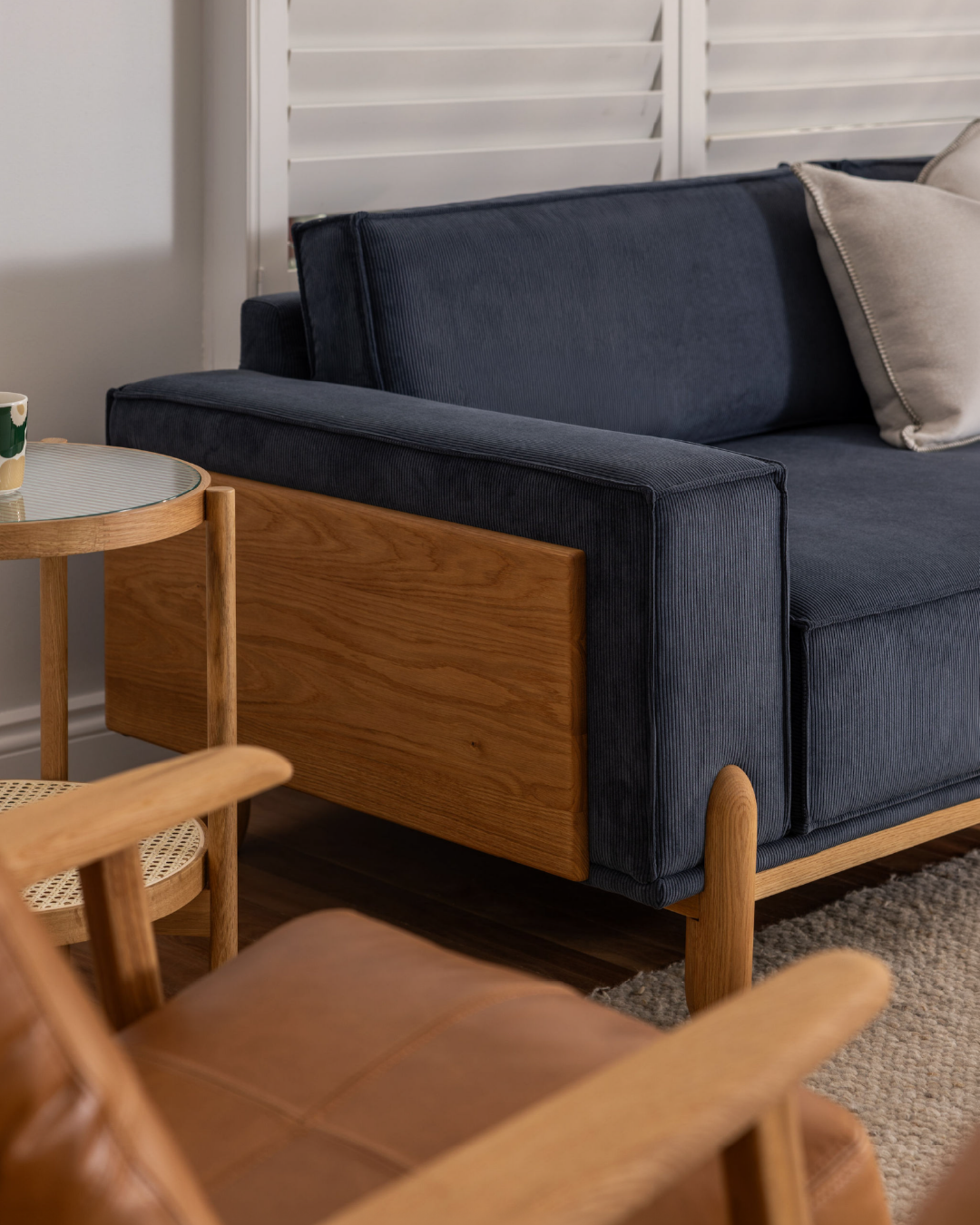
A versatile side table provides essential surface space when entertaining, particularly when your guests migrate from the dining table to the living area. Small plates and glasses need somewhere safe to land.
The challenge is in adding surface area without permanently cluttering your floor plan. Two design options handle this well.
First up is a side table with a removable tray. Built specifically for movement and multi-use, it allows you to effortlessly lift the tray surface from the frame to carry drinks or snacks and offer nibbly bits to your guests around the room, rather than carrying individual glasses back and forth from the kitchen.
Once everyone is settled, place the tray back on the frame, and voila! You have an unobtrusive side table that effortlessly works besides your sofa or armchair.
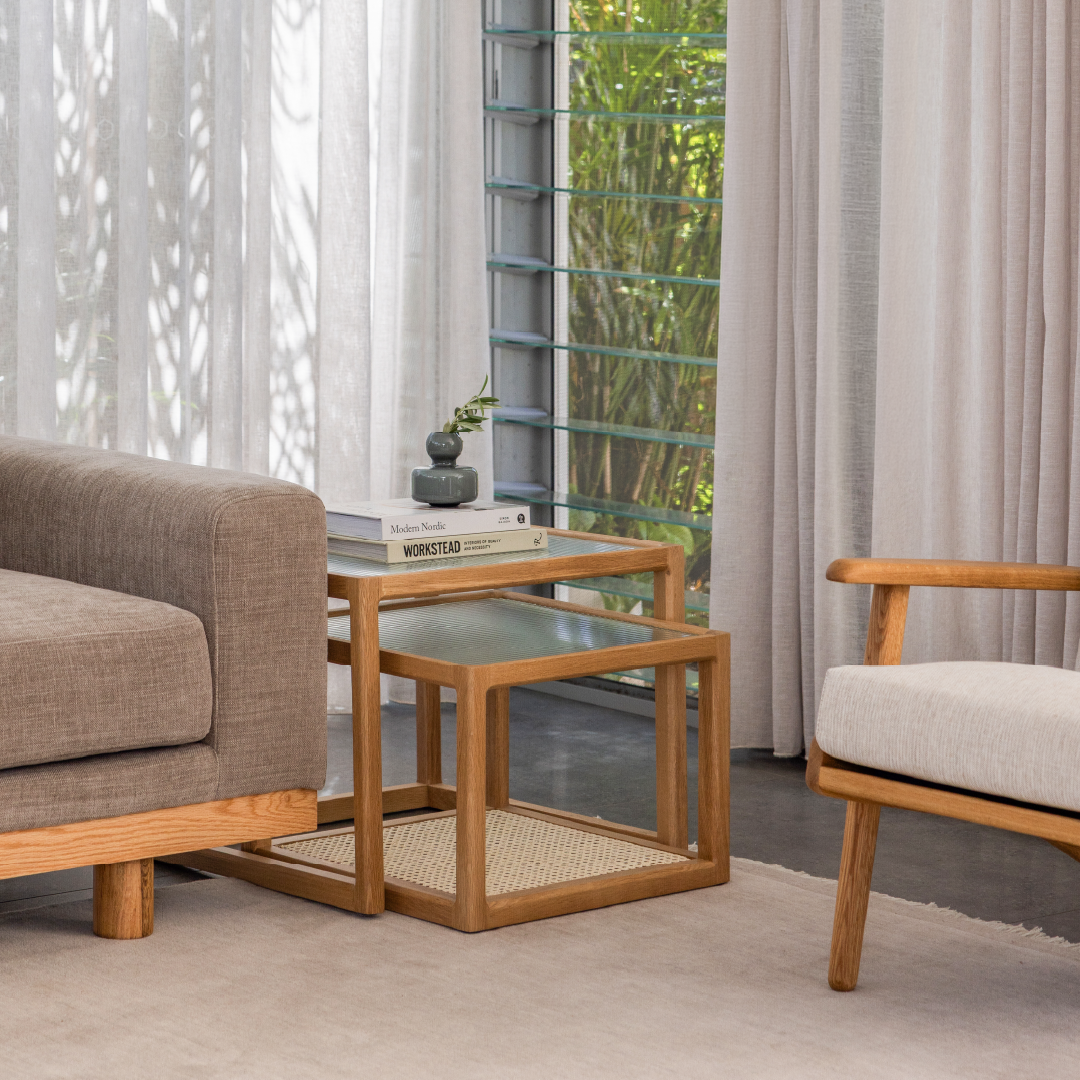
An alternative entertaining idea for tighter floor plans is a nesting side table. On the day-to-day, slide the tables mostly together to take up the space of a single compact piece.
When entertaining guests, instantly double your surface area by splitting the set. Place them on opposite sides of the room to anchor the space or leave them slightly nested for a larger landing pad in the middle of the room.
Both designs are clever additions to your living space, living effortlessly beside a sofa or armchair every day, and offering clever surface area for entertaining.

2. The Serving Sideboard
Leveraging a sideboard as a serving space when entertaining is a clever way to naturally extend your dining area and clear valuable table space.
Between the shared platters, water carafes, wine bottles, and cutlery, objects seemingly multiply the moment everyone sits down at the dining table. Before you know it, elbow room is at a premium and there’s barely anywhere left to eat. Just because the dining table is the heart of the room, it shouldn’t mean it’s overwhelmingly crowded.
Next time you’re entertaining, place large serving dishes and extra crockery on a nearby sideboard to give them their own space, rather than having them compete with your guests’ plates and glasses.
This also leaves the dining table beautifully set up for eating, rather than becoming part dining table, part serving station.
We love this clever entertaining idea because once the meal is over, the sideboard continues to offer useful storage. Store spare cutlery, table linen, serving pieces, and other dining essentials inside, while the top transforms back into a home for the framed photos, artwork, and treasured objects that make your home uniquely yours.
A mid-century oak sideboard is particularly well-suited for this dual-purpose, as it pairs generous surface area and internal storage with considered proportions that make the most of your floor space.
It’s a simple, thoughtful way to make more room for your guests around the table while getting more from the furniture you live with every day.

3. The Extendable Dining Table
An extendable dining table is an entertainer’s dream furniture piece, serving as an everyday family dining space that expands to seat extra guests when required without taking up unnecessary floor space day-to-day.
Your dining table should suit the everyday needs of your household first, as we spend most of our time at home living, not entertaining. Purchasing an oversized table suitable for entertaining eats up valuable floor space for most of the time you spend at home and leaves walkways feeling cramped.
An extendable dining table gives you the best of both worlds: a comfortable everyday footprint that keeps your space feeling breathable, with the flexibility to make room for family and friends when the occasion calls. Sacrificing floor space in those moments is okay, because it’s temporary.
Of course, not all extendable dining tables are the same. The size of the dining room can impact the shape of the extendable dining table you choose.
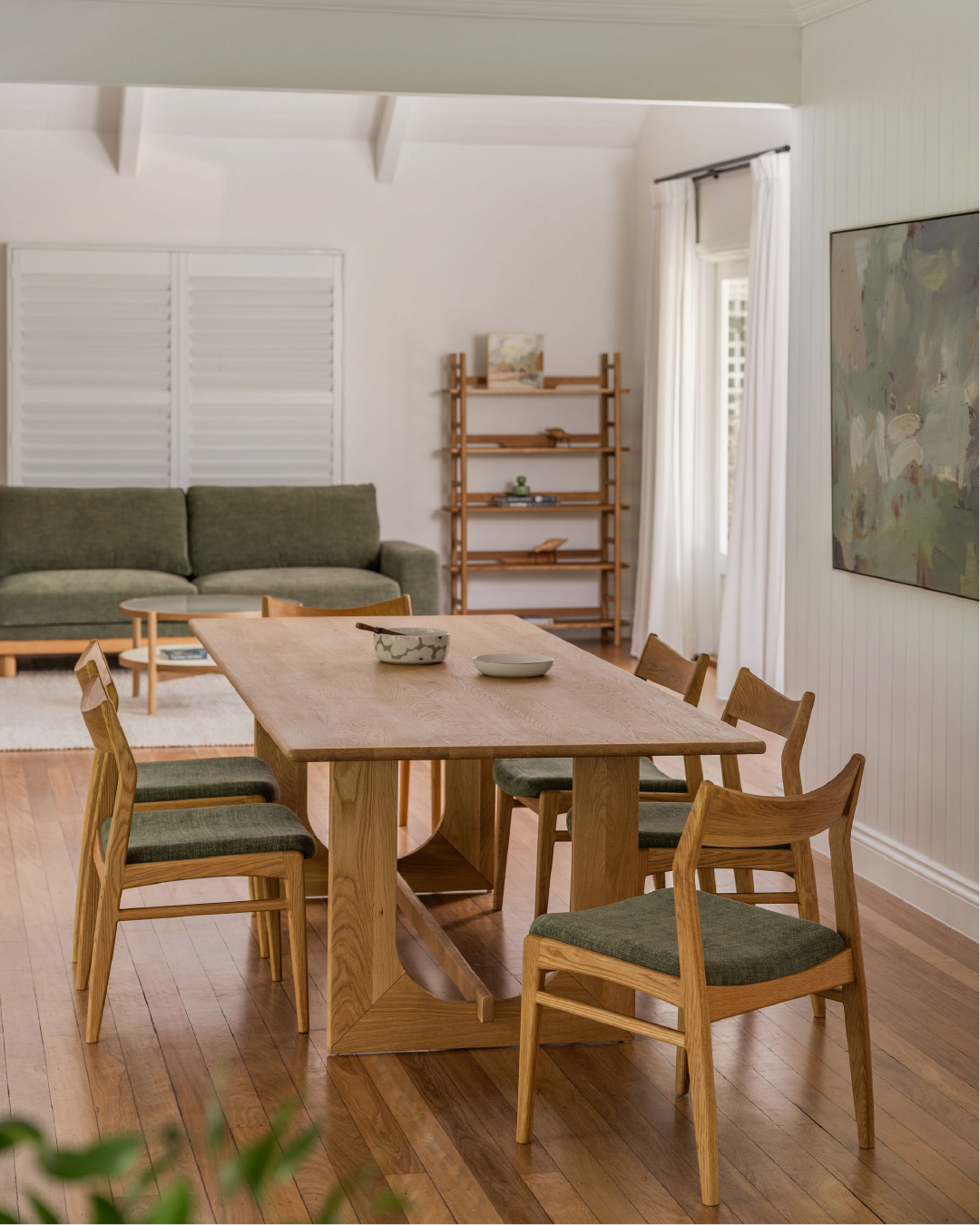
For example, a family home with space for a six-seater dining table may want a base size that seats six people. The Arna Curved Dining Table is two metres at its regular size, with a hidden extension leaf on either end that stretches it to three metres for entertaining. This design is spacious enough for regular family dining, with the ability to seat extra guests within seconds.

Alternatively, smaller spaces or families may benefit from a round design that has a clever footprint for everyday living.
The Round Dining Table with 2 Extensions starts at 120cm in circumference and seats two to four perfectly. It uses two additional extension leaves in the centre to transform into a larger oval shape.
At its smallest, there are no corners to work around, which creates a spacious feeling in open-plan homes where people are moving between the kitchen and living room. It also means everyone sits around the same curve, inviting relaxed group conversations.
Adding one extension leaf takes the table to 175cm, and the second takes it to 215cm, comfortably seating eight to ten guests before packing neatly back down for everyday living.

You may be wondering, how do I store extra dining chairs for my extendable table?
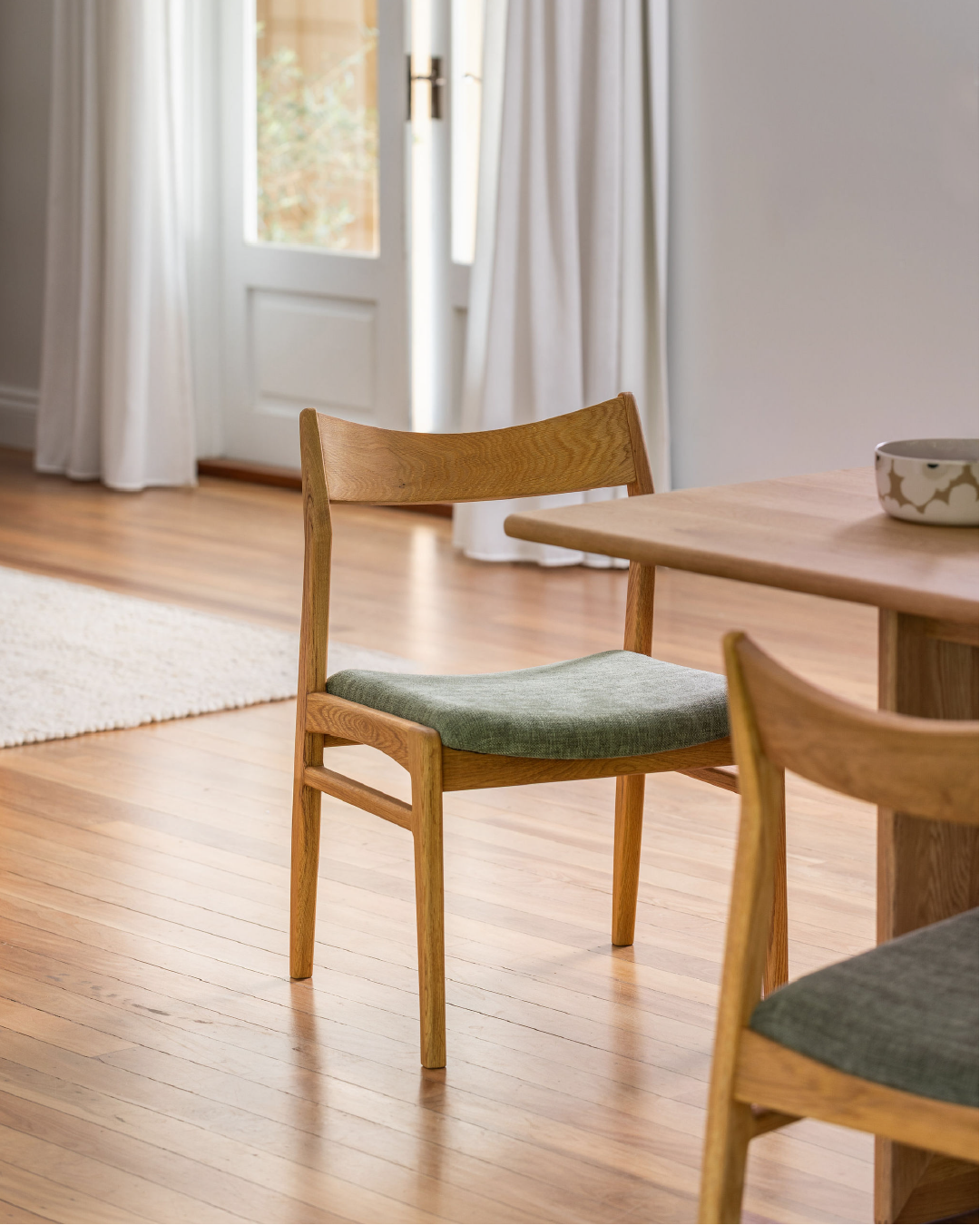
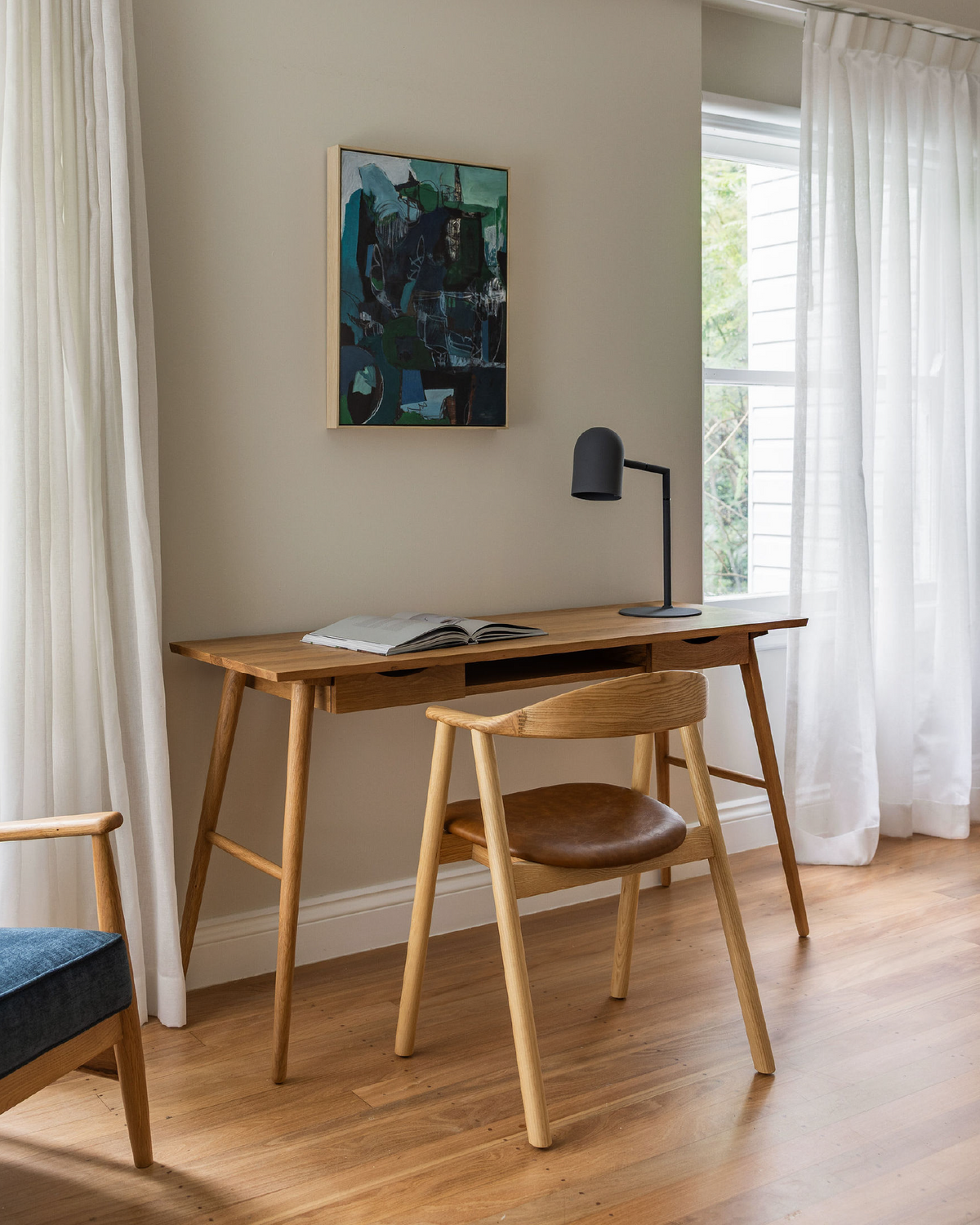
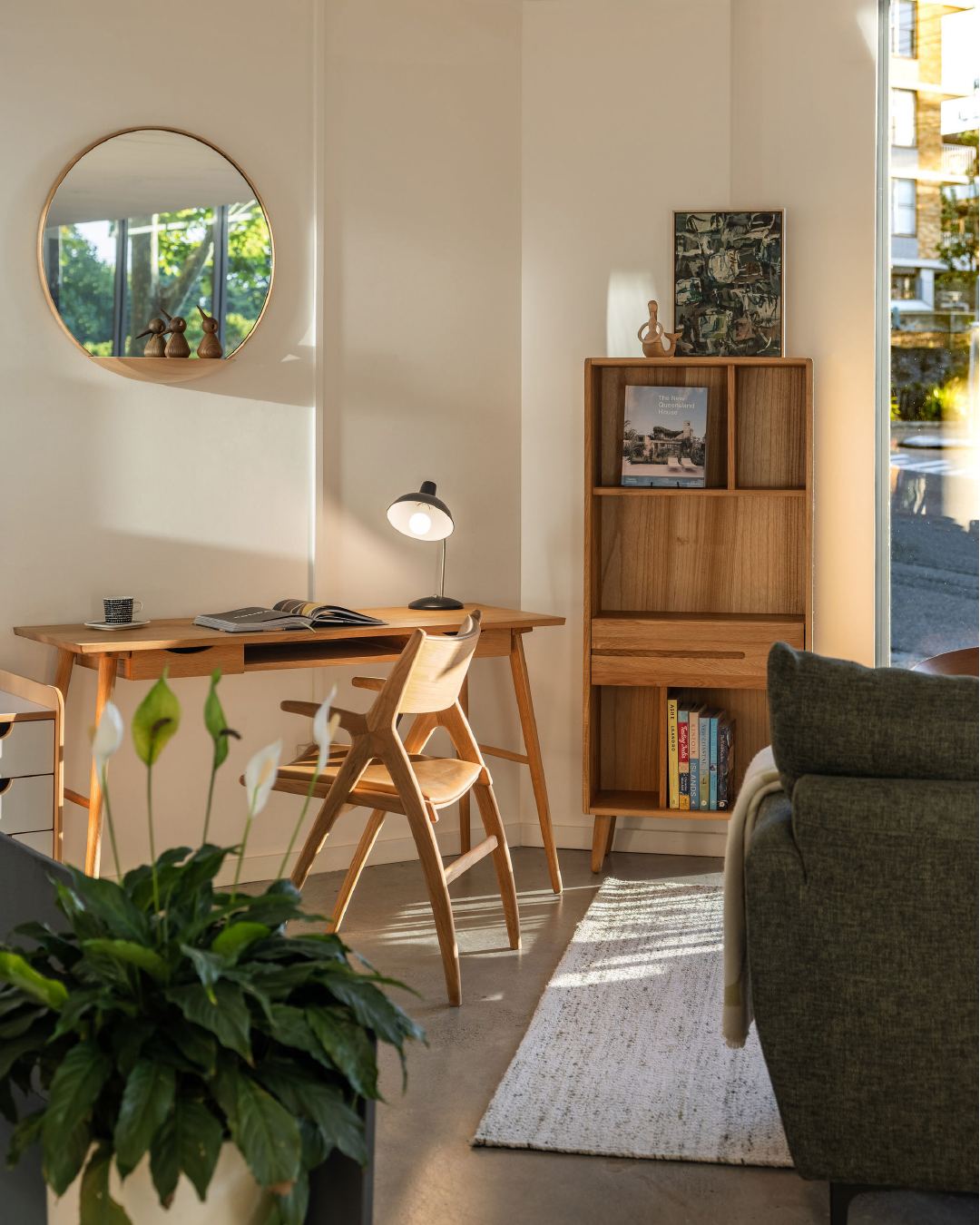
Extra chairs do not have to live permanently around the table, nor do they need to be hidden away in a cupboard. A timber dining chair at a study desk, in a bedroom corner, or beside an entryway console can be brought over when the extension leaves go in.
A dining bench is another clever entertaining idea for adding seating to your extendable table. Keep it at the foot of a bed, in the entryway or a wide hallway, and move it into the dining room when needed. Let’s unpack it in the next tip.
4. The Dining Bench
A dining bench is an easy, adaptable way to add seating when you are entertaining, without having to give every person their own individual chair.
Its biggest advantage is versatility for different groups. While individual chairs lock in rigid place settings, a bench naturally flexes to suit who is visiting. It is ideal for families with young children who can easily hop on and off without having to move a heavy chair, and it takes the awkwardness out of hosting a larger group where squeezing in an extra guest or two would usually require hunting down another seat.
Because it provides one continuous seat along the table, there are fewer legs cluttering the floor and no chair arms breaking up the visual line. It is especially useful in narrower dining zones and open-plan layouts where a row of chairs could otherwise crowd a walkway.
Dining benches have a life beyond the dining room, too.
During the week, it settles naturally into an entryway as a spot for putting on shoes, rests at the foot of a bed for spare blankets or sits quietly in a hallway. In a smaller home, being able to use it somewhere else is a real advantage. When more seats are needed, it simply moves to the dining table.
Sharing the same seat brings an easy, communal energy to long lunches and weekend get-togethers. It takes the formality out of entertaining, leaving things feeling relaxed and comfortable.

5. The Mid-Century Modern Armchair
A mid-century modern armchair is a clever way to accommodate extra guests when entertaining, without investing in extra seating that sits unused or crowds your living space. It comes into its own as the evening unfolds and conversations naturally drift away from the dining table and into the living area.
The trick is to give the armchair a home elsewhere during the week, then bring it into the living room when guests arrive. This way, you can create extra seating without permanently giving up valuable floor space or making room for a spare chair that rarely gets used.
A refined mid-century design like the Den or Map Armchair works particularly well here.
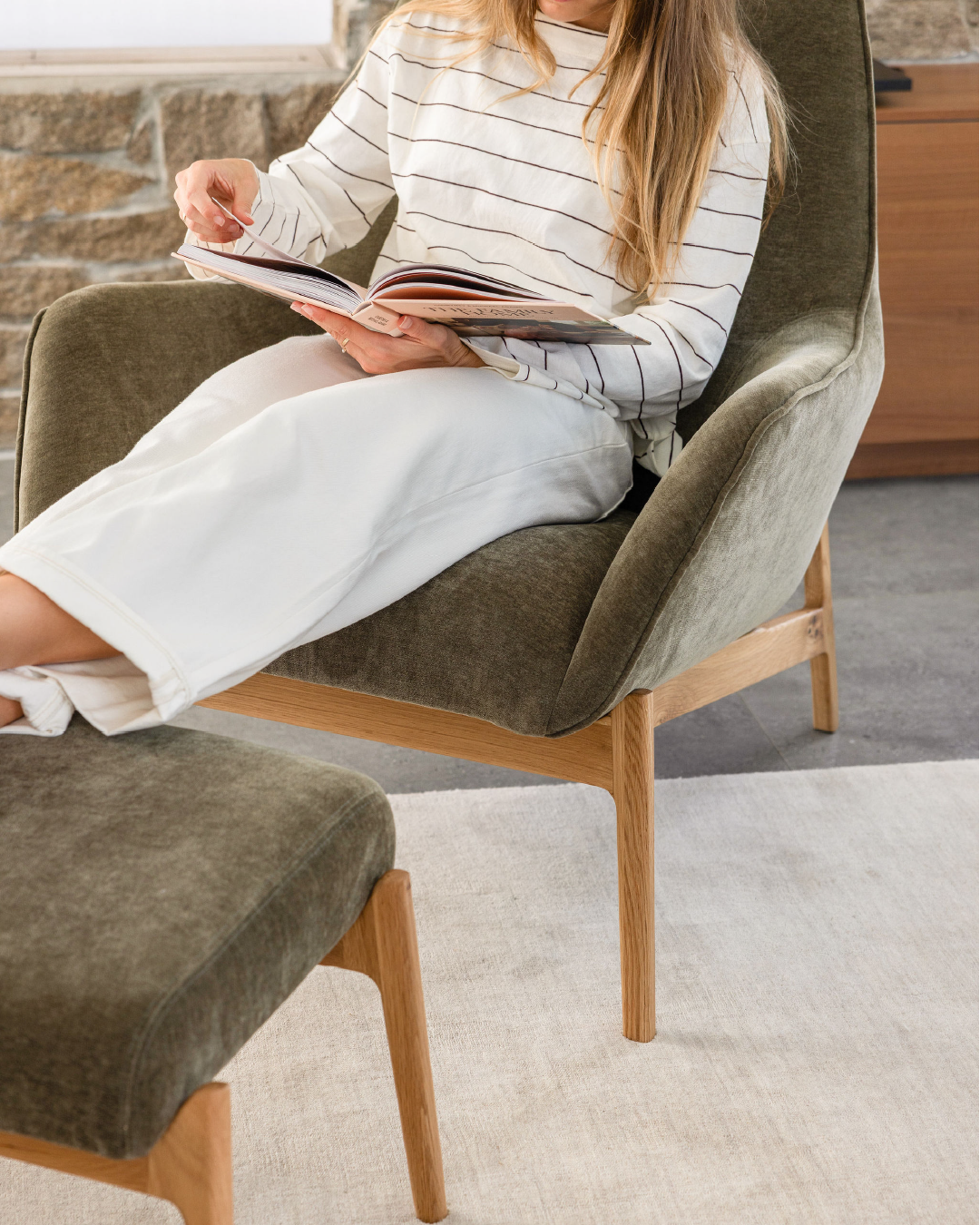
Its exposed timber frame and raised legs make it relatively light and easy to move, and its considered proportions allow it to sit comfortably in a bedroom corner, study nook or entryway without crowding the space like a chunky occasional chair would. Plus, despite its compact footprint, mid-century armchairs still offer a generous, ergonomic seat for guests to settle into once the plates are cleared.
Explore our customer favourite Den and Map armchair ranges here.

When the House Fills Up
If you take one thing away from this journal article, it’s that entertaining at home does not require a separate collection of furniture that only emerges when visitors arrive.
The most practical pieces are usually the ones that already belong in your space. A sideboard quietly provides a secondary surface for serving dishes; an extendable table stretches out to welcome a crowd; a dining bench makes room for blankets and extra guests, while an armchair drifts naturally closer to the conversation.
None of this demands a major overhaul of your room. The furniture simply shifts slightly to suit the people in it.
And perhaps that is the best part of hosting at home - your house does not have to become something completely different when friends arrive, it just needs to create connection to enjoy time together.
Frequently Asked Questions
What furniture works best for hosting in smaller spaces?
The best furniture for hosting in smaller spaces are practical pieces that adapt without taking over the room. Look for designs that do more than one job, like an extension table that scales back during the week, or accent seating and small tables that can move between rooms as guests arrive.
Which furniture pieces make entertaining easier?
Tray side tables are a clever furniture choice for making entertaining easier, giving guests a convenient place to rest drinks and snacks while doubling as a practical way to serve them. The removable tray makes it easy to carry glasses and nibbles between the kitchen and living area, while the compact frame sits neatly beside a sofa or armchair without taking up valuable floor space. Once everyone is settled, simply return the tray to its base for an everyday side table that works just as well between gatherings.
How do I stop my dining table from getting overcrowded when hosting?
To stop your dining table from getting overcrowded when hosting, use a nearby sideboard as a dedicated serving space for food, drinks, and extra tableware. Keeping heavy serving dishes, salad bowls, and glassware on the sideboard frees up valuable room for guests to eat comfortably, while creating a natural self-serve buffet area. Spare tableware, extra glasses, and fresh napkins can be tucked into the cabinetry below and grabbed in seconds without running back and forth to the kitchen, streamlining your hosting experience.
Are extendable dining tables worth it for entertaining?
Yes, extendable dining tables are worth it for entertaining because they give you the flexibility to seat extra guests without taking up unnecessary floor space every day. Keep the table compact for everyday meals and easy movement around your dining area, then add the extension leaves when friends and family come over to comfortably accommodate a larger group of eight, ten or even twelve.
What are the benefits of a dining bench over regular dining chairs?
A dining bench offers flexibility to fit more guests along one side of the table, whereas dining chairs have a fixed number of seats. Without individual chair frames, people can easily make room for an extra guest or children. When dinner is over, it can slide right under the table or move to an entryway or the foot of a bed for everyday seating.
How can I add extra seating without cluttering my living room?
A mid-century modern armchair with an open timber frame is a clever way to add extra seating when entertaining without cluttering your living room. Its lightweight design makes it easy to move between spaces, so it can live in a bedroom or home office during the week, then move into the living area when guests arrive. With its generous, supportive seat and considered proportions, it feels like a natural part of your home rather than temporary furniture brought in for the occasion.
How do you protect timber furniture when entertaining?
Protect timber furniture when entertaining by using placemats, runners, and coasters to create a simple buffer against heat and condensation. Placing trivets under hot bake dishes and felt-backed coasters under wine bottles prevents moisture rings and heat marks from settling into the timber finish. If your timber furniture marks, you can easily sand it back and re-polish it.
